
Simulating the Future in Life Sciences
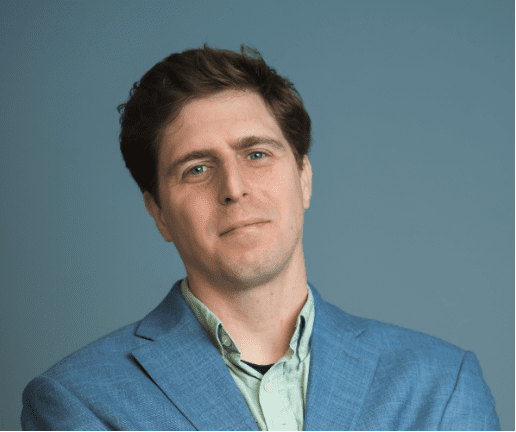
In the latest episode of Practical AI in Healthcare, we sat down with Orr Inbar, CEO and co-founder of QuantHealth, an Israeli company at the forefront of AI-based clinical trial simulation. This conversation was one of the most illuminating we’ve had on where AI and life sciences are truly heading — not in theory, but in practice.
QuantHealth’s mission is bold: use AI to predict how therapies will perform in clinical trials before those trials are run. As Orr puts it, drug development is defined by a massive gap between the data the healthcare system produces and the insights pharma can actually extract from it. QuantHealth exists to close that gap, using a combination of mechanistic biology, vast real-world datasets, and deep learning models trained on billions of patient-drug interactions.
The result? Clinical trial simulations with accuracy rates that would have seemed impossible just a few years ago.
The Origin Story: From Pre-Med to Computational Medicine
Orr’s journey spans the United States and Israel, weaving together medicine, computer science, and entrepreneurship. After completing pre-med coursework, he realized that treating one patient at a time wasn’t the scale of impact he wanted. Machine learning offered a path to combine both sides of his background — biology and computation — and ultimately to influence health outcomes at scale .
Before founding QuantHealth, Orr was part of the early leadership team at ConcertAI, where he saw firsthand both the potential and limitations of real-world data. The biggest limitation was not a lack of data — healthcare generates massive amounts of it — but the inability to transform that data into actionable insights for R&D. That gap shaped the foundation of QuantHealth.
The Core Idea: Predict the Trial Before You Run It
As we discussed on the podcast, clinical development is defined by uncertainty. Ninety percent of drugs entering human trials never make it to approval. Much of that failure rate comes down to four core questions:
• Who should be treated?
• When should they be treated?
• How should they be treated?
• And what should be measured?
Answering these questions is the domain of the clinical study protocol — arguably the single most influential document in drug development. And yet, for decades, protocol design relied heavily on expert judgment, historical precedent, and educated guesses by experts in the field.
QuantHealth is changing that dynamic.
Their platform builds two massive “virtual universes”: one of drugs (capturing mechanisms, pathways, targets, and biological interactions), and one of patients (constructed from real-world data representing hundreds of millions of individuals). A proprietary foundation model — with hundreds of millions of parameters — learns the deep patterns that govern how drugs and patient biology interact .
By pairing virtual drugs with virtual patients at scale, QuantHealth can simulate trial outcomes, testing thousands of potential protocol variants to identify those with the highest probability of success.
Does It Actually Work?
This is the core question — and Orr is refreshingly direct about it.
QuantHealth runs extensive validation:
• Data quality checks
• Model perturbation tests
• Patient-level prediction accuracy evaluations
• Back-testing against historical clinical trials
• And most impressively: prospective validation by predicting results of ongoing blinded trials just weeks before the data are released
Across more than 350 retrospective and ~50 prospective validations, the platform predicts trial outcomes with 80–90% accuracy across oncology, cardiometabolic disease, autoimmunity, and more, and across phases I–III .
For a field used to uncertainty, that level of performance is extraordinary.
Why Protocol Design Is the Next AI Frontier
In our conversation, we emphasize that protocol design may be the single biggest lever for improving success rates, reducing amendments, accelerating timelines, and avoiding costly failures. Many R&D leaders intuit this, but have lacked tools capable of examining protocol decisions at scale.
QuantHealth enables:
• Testing thousands of eligibility criteria combinations
• Evaluating endpoint sensitivity and robustness
• Identifying patient subgroups most likely to respond
• Estimating commercial impact and label implications
• Determining safety and timing considerations
• Detecting the root causes of ambiguous Phase 2 readouts
Pharma companies often come to QuantHealth when a program is struggling — after an unexpected Phase 2 result or an unclear efficacy signal. But once they see what simulation makes possible, they start integrating it earlier in the pipeline.
The Future: Will Trials Begin — or End — with Simulation?
Orr makes a provocative prediction: within a decade, every clinical trial will begin with a simulation. And in the longer term — perhaps 10 to 15 years — simulation could dramatically reduce the scale of human exposure needed before approval. Not eliminate trials entirely, but compress them, refine them, and make them safer.
The underlying premise: if aerospace engineers won’t build a rocket without running thousands of simulations first, why should we expose patients to a protocol we haven’t simulated?
It’s a striking analogy, and one that reflects the maturation of biological data, real-world patient data, and transformer-based AI.
A Turning Point for Drug Development
As we closed the episode, the three of us agreed: five years ago, none of this would have seemed possible. Today, it’s already reshaping how companies approach R&D. And five years from now, it may be unthinkable to design a clinical trial without simulation as the first step.
QuantHealth is not just automating analytics — it’s redefining what’s knowable before a trial ever begins.