
What a Nurse’s Charting Pattern Knows Before the Vitals Do
Every hospital early-warning system makes the same assumption: to predict if a patient is deteriorating, watch the patient. The vitals, the labs, the telemetry. Sarah Rossetti, RN, PhD, built one that watches the nurse instead, and on National Nurses Day, she became the first nurse to join us on the show.
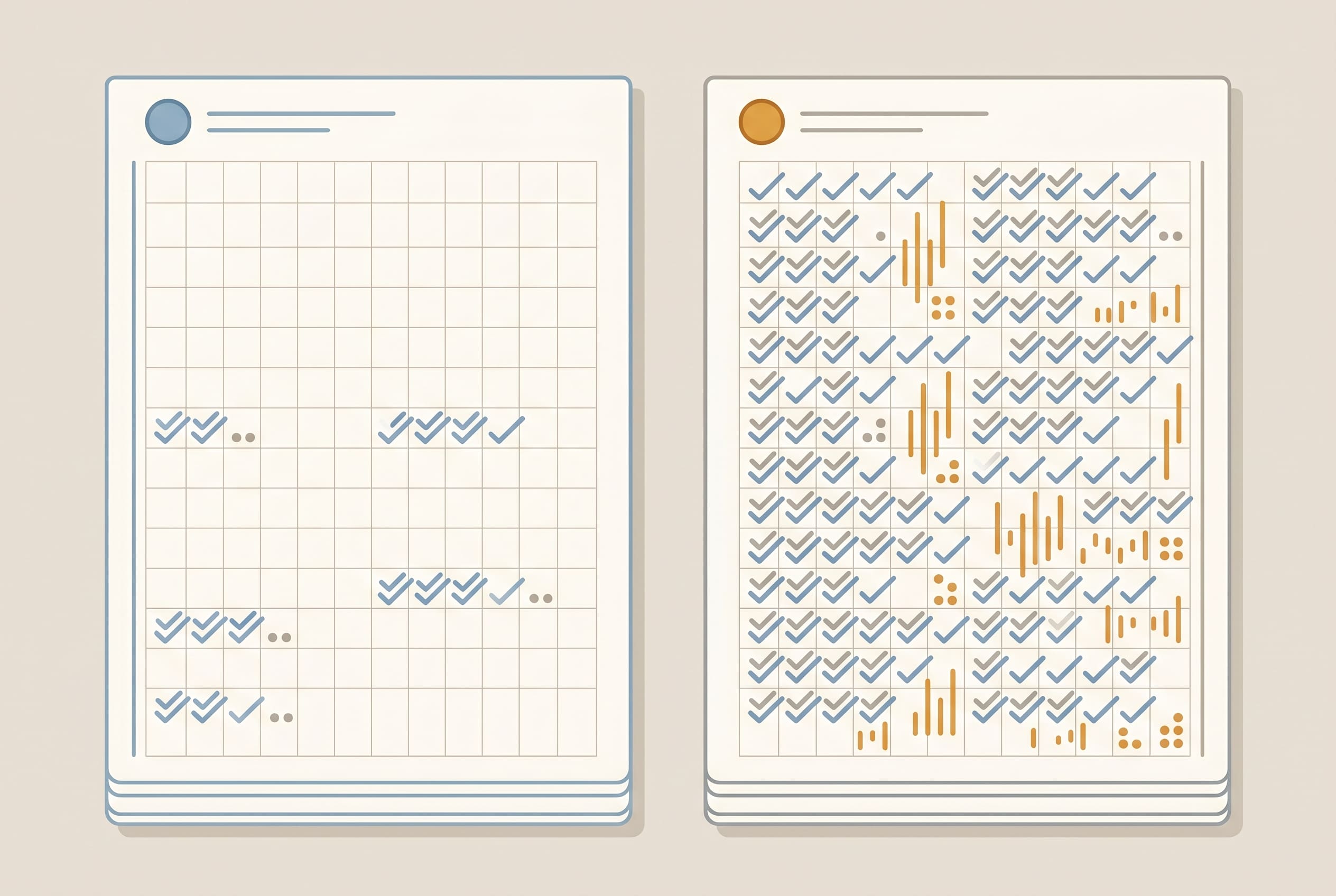
Her system is called CONCERN, for Communicating Narrative Concerns Entered by Registered Nurses. Its insight came from a paper flow sheet. As a new ICU nurse, Rossetti noticed that the patients senior nurses weren’t worried about had a lot of white space on the chart. The patients they were worried about had densely packed records. “Can we understand a nurse’s level of concern from the density of their documentation?” she asked. That question became the study.
The signal is in the frequency, not the values
CONCERN doesn’t read what a nurse charts so much as how often and when. A nurse who goes into a room repeatedly, or records vital signs at 3am on a patient who should be resting, is sending a signal. When a nurse is worried, they reassess. That behavior fires before a vital sign moves. “A vital sign change is a late indicator,” Rossetti told us. Her models, an ensemble of about 1,200 tuned to different shifts and patient contexts, detect deterioration roughly two days earlier than vitals-based scores.
The approach has a quiet virtue: it asks nurses for nothing new. No extra fields, no added documentation burden. It reads the trace they already leave.
The number that looks like a failure
The trial was large: 74 units, more than 60,000 patients, across Columbia and Boston hospitals, published in Nature Medicine. Mortality risk dropped 35.6%. Sepsis risk fell. Length of stay shortened. And unanticipated ICU transfers went up about 25%.
That last number sounds like a regression. It isn’t. “An early ICU transfer is going to go much better than a late ICU transfer,” Rossetti explained, and her team showed exactly that: patients moved early did far better than those moved late. More transfers, sooner, meant fewer deaths.
What it means for builders
Rossetti’s team built against the usual complaints about clinical AI. No pop-ups, to avoid alarm fatigue; the score writes to a flow-sheet row with a small asterisk when it changes. They checked for bias by race and primary language and adjusted the deployed model, while calling that work “just scratching the surface.” And they are watching what ambient AI scribes do to the signal, with the hope that it makes nurse behavior easier to model, not harder.
Her closing advice to health systems wasn’t to buy software. It was to give nurses time back. “Let’s remove some of the burden that we impose on nurses,” she said. As Leon put it in the conversation, a nurse who is filling out a form is not eyeballing the patient. Protect the surveillance, and the signal takes care of itself.
Listen to the full conversation: https://practicalaiinhealthcare.com/episodes/#S1E39
More about the guest: Sarah Collins Rossetti, RN, PhD — Columbia DBMI faculty profile
You Might Also Enjoy
- S1E33 with Edward H. “Ted” Shortliffe, MD, PhD — Fifty years of clinical decision support, and what endures: useful context for where a tool like CONCERN sits in the long arc of clinical AI.
- S1E37 with Danny van Leeuwen, RN, BSN, MPH (Health Hats) — Another nurse’s lens on AI in care, this time from the patient’s point of view.
- S1E36 with David Hidalgo-Gato — Ambient AI built around real clinical workflows, the same frontier Rossetti is watching for its effect on nursing documentation.