Practical AI in Healthcare

S1E41-Campos-LinkedIn-Hero

The Patient Who Stopped Waiting and Built It Himself

For more than a decade, Hugo Campos was one of the most recognized voices in...
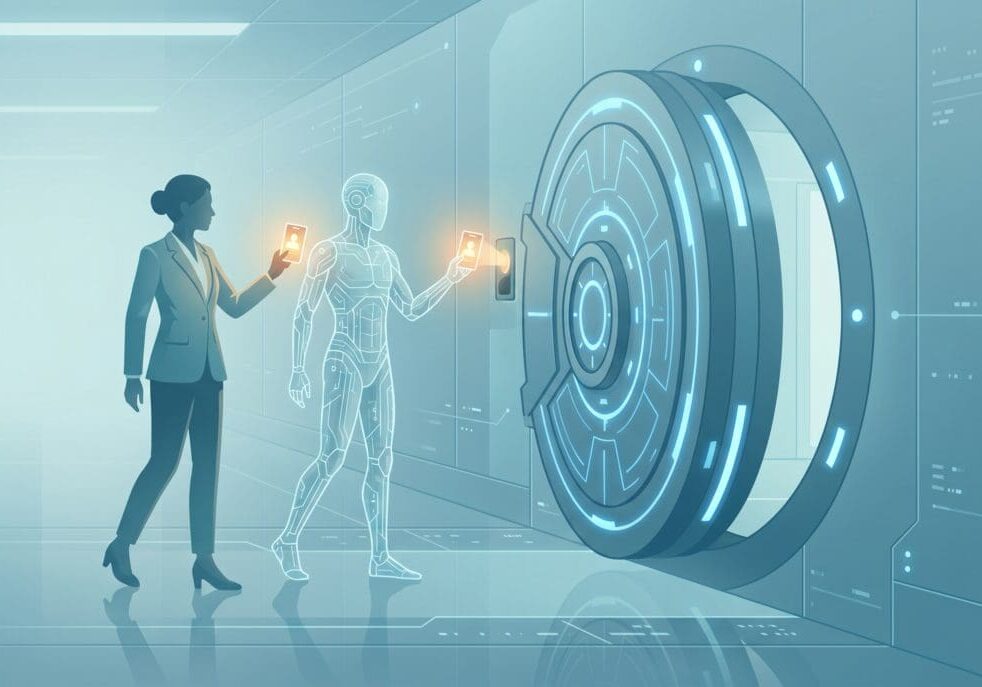
A clinician and an AI agent both hold digital ID credentials to access a secure health data vault, illustrating ONC's HTI-5 proposed rule redefining authorized "users" to include autonomous AI systems and robotic process automation under federal information blocking regulations.

When an AI Agent Has the Same Data Rights as Your Doctor

Most companies building AI for healthcare run into the same obstacle, and it isn't the...
A conceptual illustration of the CONCERN early-warning AI model used in nursing informatics. It compares two nursing flow sheets: a left chart with mostly white space and minimal checkmarks indicating a stable patient, and a right chart crowded with dense documentation, checkmarks, and orange bar graphs. The image visually represents how the AI analyzes the density of a nurse's charting behavior to predict clinical deterioration.

What a Nurse’s Charting Pattern Knows Before the Vitals Do

Every hospital early-warning system makes the same assumption: to predict if a patient is deteriorating,...
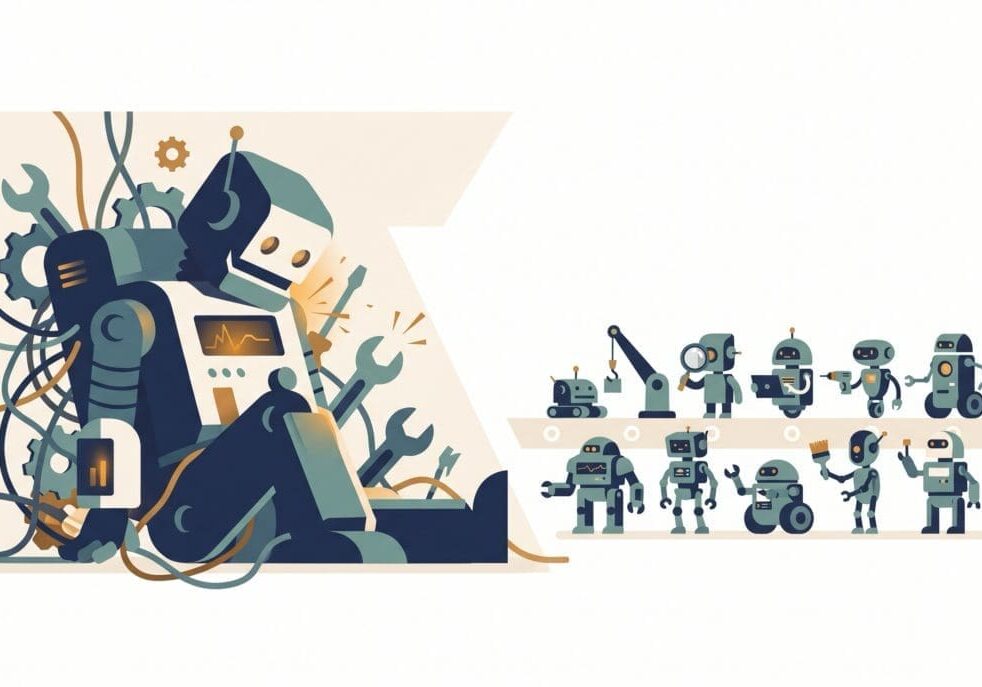
Generalist AI vs specialized AI illustration: a tangled multi-purpose robot on the left gives way to a row of purpose-built robots on the right, each designed for a specific job

How Specialized Does AI Have to Be to Actually Work?

Every few episodes, we stop interviewing and start synthesizing. This is our fifth Reflections episode,...
Danny van Leeuwen wears many hats in healthcare. Five hats on a coat rack tagged Patient, Nurse, Caregiver, Advocate, Informaticist — illustrating the perspective of a patient-centered healthcare AI advocate

What Patients Actually Want From Healthcare AI (And What’s Missing)

The Pattern in the Chart In 2009, after another cardiac workup that resolved before the...
Illustrated diagram showing an iterative product development cycle in healthcare AI, titled '40 to 50 Iteration Loops · 9 Months · One Customer.' A circular feedback loop connects three versions of a clinical note interface (v1, v2, v3), with a doctor and a product developer conversing in the center. Annotations describe key product insights: 'I will not verbalize every finding,' 'but labs come back later,' and 'iterate again.' The hand-drawn, blueprint-style illustration emphasizes deep customer discovery and rapid prototyping in clinical workflow software development.

When AI Eats Software, What’s Left? Workflow Understanding as the Last Moat

The Bet In 2023, three Yale data scientists — David Hidalgo-Gato, Jackson Pullman, and a...
Barry Chaiken MD MPH healthcare IT leader and AI in healthcare expert

The Physician Who Became a Patient and What It Taught Him About AI in Healthcare

When the Doctor Becomes the Patient Barry Chaiken, MD, MPH, has spent decades in healthcare...

S1E34-Truppo-Pt2-LinkedIn-4

When AI Meets Real Patients: Inside Sanofi’s AI-Powered Clinical Development Pipeline

In Part 1 of our conversation with Matt Truppo, the story was about AI doing...

Dr. Shortliffe is a MYCIN rule-based expert system Stanford 1970s clinical AI

50 Years of Clinical AI: What We Built, What We Lost, What Still Hasn’t Changed

The Question That Never Changed Fifty years into the story of medical AI, one question...
S1E32-Truppo-Headshot

When AI Moves Past the Mundane: Inside Sanofi’s Drug Discovery Pipeline

For 30 episodes of Practical AI in Healthcare, we've documented a recurring pattern. Guest after...